By Serah on March 22, 2014

This will be the fourth talk of the Oecologies Speaker Series at Green College at UBC.
Dr. Renisa Mawani
(Sociology, University of British Columbia)
“‘Rule Britannia! Rule the Waves’: The World of the Ship and the Quest for Global Time”
Abstract: Recent accounts of the creation and imposition of a global and standardized time – through nineteenth-century developments, most notably the railway and telegraph – have only reinforced the primacy of land. Written at the juncture of law, science studies, and empire, this talk shifts optics from land to sea, and in so doing tells a different history of global time that centres on the world of the ship and on imperial and maritime struggles over longitude. Ultimately, it argues that the standardization of time, to which naval navigation and the ship were central, formed a crucial register of British imperial governance.
Oecologies: Inhabiting Premodern Worlds is a new Speaker Series sponsored by Green College that gathers scholars from the humanities living and working along the North American Pacific coast to investigate the idea of “oecology,” an older spelling of the modern concept “ecology.” For event details, abstracts, and speaker information, please visit oecologies.com or view the event poster. Also follow us on Twitter (@Oecologies) and “Like” us on Facebook (facebook.com/oecologies)! If you have questions about Oecologies, please do not hesitate to contact Dr. Vin Nardizzi or the project assistant, Carmel Ohma
Times: 5-6:30pm, Wed Mar 26
Location: Coach House, Green College, UBC, 6201 Cecil green park road,
Vancouver BC, V6T 1Z1
Posted in News And Events
By Serah on December 11, 2013
 Dr. Alison Alkon
Assistant Professor and Chair of Sociology, University of the Pacific
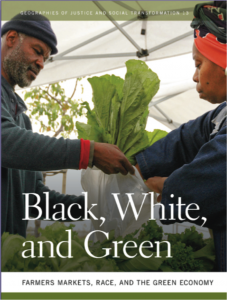
This talk will begin by describing the emergent concept of food justice, which is found at the nexus of inequalities and food and agricultural systems. It will lay out some of the guiding questions and theoretical antecedents that have helped to define the field. Next, Alkon will offer an example from her own ethnographic work in the San Francisco Bay Area. There, Alkon compared predominantly black and white farmers markets to better understand the ways that race and class shape the visions and goals that communities assign to sustainable agriculture. From this research she argues that both communities sought to create more just and sustainable food systems, and that efforts to do so were simultaneously inventive and limited by each market’s social location. However, she also describes how economic inequalities pervade both farmers markets in ways that cannot be resolved without broader structural changes. Alkon will draw from this knowledge to comment on the field of food justice research, and to highlight potential directions for new work.
Alison Alkon is Assistant Professor and Chair, Sociology at the University of the Pacific where she teaches and does research on food, the environment and inequalities of race, class and gender. Alkon’s books include Black, White and Green: Race, Farmers Markets and the Green Economy and Cultivating Food Justice: Race, Class and Sustainability (co-edited with Julian Agyeman). These works have helped to establish the growing field of Food Justice Studies which explores how inequalities affect food and agricultural systems and how communities and policy makers are responding to these inequalities.
Time: Wednesday Jan. 22, 12-1pm*
Place: Jack Bell Building, 028, 2080 West Mall, UBC
Directions to GRSJ on UBC Campus: http://bit.ly/R5WyjE
Download the poster
Institute for Gender, Race, Sexuality and Social Justice www.grsj.arts.ubc.ca
Co-sponsored by Ecologies of Social Difference: Social Justice @UBC research network https://esd.sites.olt.ubc.ca
*Lunch will be provided at noon for those who RSVP: wynn.archibald@ubc.ca
Posted in News And Events | Tagged ESD Event, food justice, sustainable food systems
By Lucy Rodina on September 15, 2013
Caring for caribou/killing atîku: The Common World and Radical Alterity, Noon Lecture with Lunch, Social Justice @UBC: Noted Scholars Lecture Series.
 Bruno Latour has advanced the concept of cosmopolitics (borrowed from Stengers) as a potentially more sturdy way to constitute a common world. In this version, cosmopolitics stands for a politics of worlding that differs from a politics based on the assumption of a world already existing ‘out there.’ In this presentation I discuss how a turn to ontological politics is extremely useful to address so called environmental conflicts but also, and through a case study from Labrador, how in the formulation of a common world some important issues still linger. These issues underscore the co-presence of complexly overlapped and stratified worldings and the urgency to re-center the problematic they entail for how we stage ontological politics.
Mario Blaser is the Canada Research Chair in Aboriginal Studies at Memorial University of Newfoundland, the author of Storytelling Globalization from the Chaco and Beyond (Duke University Press, 2010), and co-editor ofIndigenous Peoples and Autonomy: Insights for the Global Age (UBC Press 2010) and In the Way of Development: Indigenous Peoples, Life Projects and Globalization (Zed/IDRC 2004). He has worked for over 20 years with the Yshiro people of the Paraguayan Chaco and, since 2009, he has been conducting research in association with a group of Innu hunters and elders from Labrador.
Event details:
When: Wednesday the 25th, NOON
* FREE LUNCH will be provided to all those who RSVP to wynn.archibald@ubc.ca
Where: Institute for Gender, Race, Sexuality and Social Justice
Directions to Office 028, Jack Bell Building: http://bit.ly/R5WyjE
Posted in News And Events | Tagged conservation, Environment, Labrador
By Lucy Rodina on March 29, 2013
ESD Social Justice @ UBC is proud to announce that the group has been named a New Thematic network under IGRSJ. The Institute for Gender, Race, Sexuality and Social Justice is a degree-granting academic unit that exemplifies UBC’s commitment to ensuring critical advances in knowledge, democratic communities, and equity in scholarship, research, and teaching. Scholars in the Social Justice Institute are engaged in innovative theoretical and empirical work that advances and enriches current knowledge and critical dialogue about culture, politics and public policy, locally, nationally and transnationally.
ESD Social Justice @ UBC looks forward to collaborating with IGRSJ!
Posted in News And Events